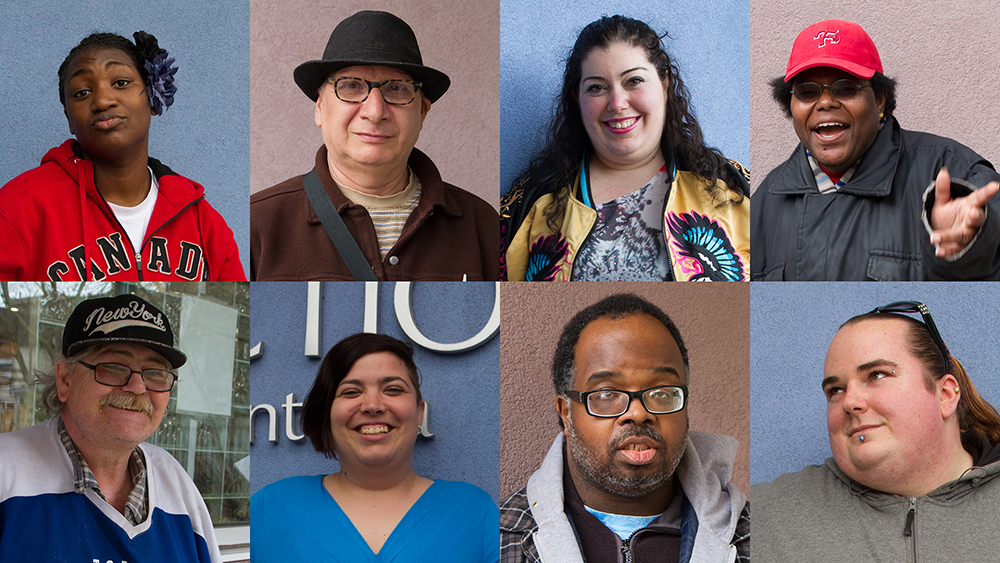
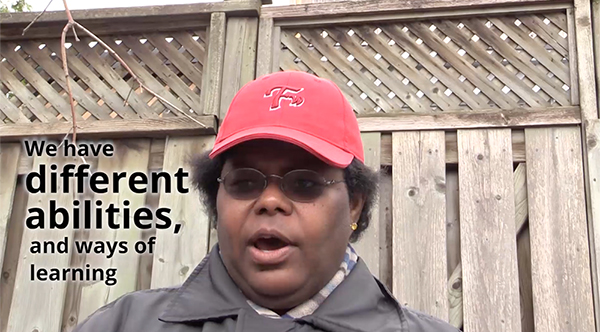
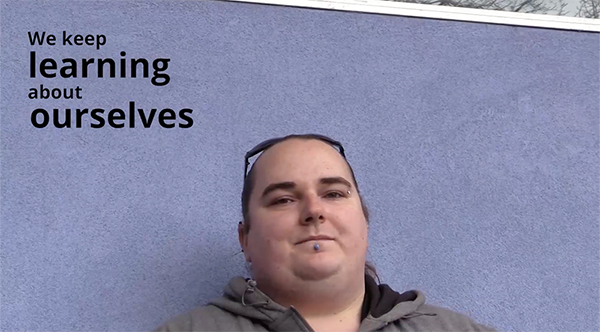
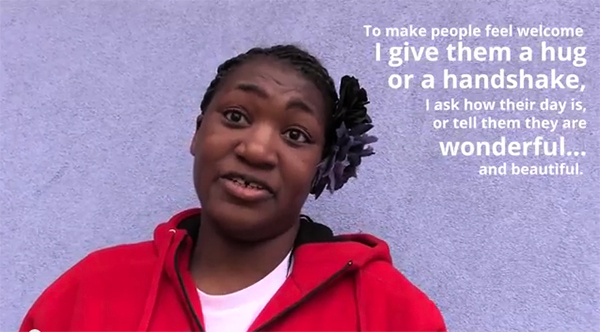
When we talk about Inclusion, we talk about appreciating diversity and what makes each of us different and unique. Inclusion is about making everyone feel welcome without trying to change them, silence or negate some parts of their true self. We all have the right to be included in our community, and no one has the right to discriminate against us for any reason, because human rights are the law in Ontario and in Canada.
When we appreciate and celebrate differences, we help create a culture of Diversity and Inclusion where everyone feels a sense of belonging and benefits from a safe, healthy and positive living and working environment. When people feel accepted fully for who they are, they participate and contribute more, and overall have a better experience and quality of life.
Discussing Diversity in simple terms
Diversity happens when people are different, together.
Many differences all in the same place, getting along and respecting each other.
We all have differences and similarities, and that is a beautiful thing!
Video Discussion Questions:
Now that you’ve watched the video, use these questions for personal reflection or to facilitate a discussion with your team:
What suggestions for inclusion shown in the video can be applied in your own organization, family or community?
What are some of the things you are already doing to be inclusive? What has worked well for you?
Name one thing that you can personally commit to doing to help create a safer and more welcoming environment for everyone.
Being an ally
An ally is someone who supports equal rights for others and acts when people face exclusion and discrimination. You can be an ally to those who have had to struggle for their rights throughout history including people with disabilities, black and indigenous communities, and gays, lesbians and transgendered people.
Anyone can be an ally in helping to create a safe and more welcoming and inclusive environment.
Supportive Advocate Checklist
An activity to help you become more aware of your role as an ally or advocate, and to learn how to better support diverse individuals. Supportive Advocate Checklist
Do you feel that you are being treated unfairly?
Here are some steps that you can take:
Tell someone you trust about what has happened as soon as possible.
Find out what the formal complaint process is in the place where the incident happened. Find out who the right person is to tell your concern. For example, a supervisor, manager or someone in charge.
Document the incident and keep a record of all the facts related to the situation: Who, What, When, Where, How. You can ask someone to help you with that.
Follow up with your complaint: ask about the outcome and rationale behind the decision, or a confirmation that things have been resolved. If things were not resolved, review your options, decide on the next steps and enlist someone to support you through the process.
To learn more about your human rights and resources available:
Despite the differences, one important thing we all have in common is that we are human. We might also have lots of other things or qualities in common with each other such as liking the same kind of music or enjoying similar types of food. People can belong to the same faith or cultural group, or belong to a community they identify with based on their life experiences. We can build new connections with people with similar or different backgrounds and experiences. That’s what “Bridging Diversity” is all about.
People use different terms to define their ethnicity and racial identity. It is important to be culturally sensitive and aware, and to take the time to learn and understand what each term means. There are many resources online to help us understand the language of equity and diversity. Below are some links to resources and tools on-line that can help you expand your knowledge of diverse experiences.
People associate skin colour and physical features with particular races. But it is important to understand that we are all part of one race which is the human race. Racial categories are not based on science; they were created by people in the 1600s and were used to justify slavery and discrimination based on race. But racism and racial inequality still exists and has a harmful impact on our society. Human rights laws help protect people from discrimination based on race and ethnicity.
Video Discussion Questions:
Now that you’ve watched the video, use these questions for personal reflection or to facilitate a discussion with your team:
What do you share in common with the people in the video? What can you relate to based on your own lived experience?
“We are more alike than we are different.” Do you agree with this statement? Why or why not?
What can we do to promote empathy and kindness in our spaces and communities?
Diversity means variety; different ways of being human. Diversity happens when there are all kinds of different people present in a group, organization or society. Diversity is multidimensional: people can differ from one another in a variety of ways such as age, gender, skin colour, language, culture, ability, ancestry or ethnicity.
How we understand and talk about Diversity is always changing. If we are unsure about what language or term to use, it is best to ask respectfully. Asking is easier when we establish trust.
It’s ok to be different. Acceptance, kindness and empathy are the best tools to use in any scenario.
Step 1
How are we different?
One way to think about our differences is to imagine an iceberg. About 10 per cent of the iceberg is above water and therefore visible, but most of it remains hidden under water.
This online resource was created to help you gain a deeper understanding of Equity and Diversity in order to promote Inclusion where you work, live and play. The videos, discussion guides, activities and suggested resources can all be used in a variety of ways to facilitate brave conversations about what makes us different, and how we can create a safe and welcoming environment for everyone.
The toolkit was created as part of a sector-wide initiative led by Community Living Toronto in partnership with the Developmental Services Toronto, with funding from the Ontario Trillium Foundation.
As this is a new and evolving project, we continue to learn and improve as we go. We welcome any feedback, questions, and suggestions for new resources and tools to add to our toolkit!
Fostering Inclusion and Diversity in the Workplace
In this important Keynote, Joel invites employees to foster diversity and inclusion in a meaningful way. Joel addresses how unconscious bias can affect our daily interactions and shape important decisions. He outlines how inclusion can help drive innovation and business
Imagine a flower with lots of petals: each petal represents a part of you that makes you special, or a part that is important to you that makes you who you are as a person.
Some of our differences are visible, like the colour or shade of our skin, the shape and size of our body, the colour of our hair and eyes, and the clothes we wear. Some people wear a head cover or an item that is part of their faith or culture. Sometimes you can tell someone is male or female, and sometimes gender is ambiguous. You may notice a person’s disability because they use a mobility device or a guide-dog, but many disabilities are invisible.
One way to think about our differences is to imagine an iceberg. About 10 per cent of the iceberg is above water and therefore visible, but most of it remains hidden under water. When we meet people, we make quick judgements and assumptions based on what we see on the surface. But, most of the person’s identity remains unknown to us until we take the time to get to know him or her better.
Video discussion questions:
Now that you’ve watched the video, use these questions for personal reflection or to facilitate a discussion with your team:
What thoughts and feelings arise for you from watching the video? What do you notice? Was anything surprising?
What are the different dimensions of diversity that you recognize in the video? In what ways are the individuals diverse?
What are the benefits of acknowledging and appreciating people’s differences?
By Aakilah Ade RN, AFCN, LNC, CEO of Intel Health Care Services Inc.
“And I came close to losing a part of my foot on two occasions. I hope I’m consistently lucky and that the next time I develop a blister or step on something sharp, that I don’t go as far as I did on those two times.” Mary Tyler Moore
Members of the population, who are developmentally or emotionally challenged, need the intervention of caregivers to remind, encourage, supervise, support and sometimes provide total care. The focus of this article is about maintaining foot health and the caregiver’s role in preventing foot complications.
Persons who are not independent with their own care are at a higher risk for diseases of the foot than persons who can meet their own care needs. The level of risk increases with each additional medical condition, with multiple medications, and with age. Complications include but are not limited to anatomical changes, pain and discomfort, alterations to gait, wounds, infections and amputation.
The observation and maintenance of general foot health begins with daily hygiene. Before bathing the care provider can look for problems such as open areas in the skin, peeling or flaky skin, excessive dryness, new lumps, bumps, bruising, odour, redness or excessive moisture. These are signs and warnings of problems and potential complications. Formal and informal providers of personal care must report these findings to someone who can implement a medical assessment, a medical intervention or a medical referral.
It is important to note changes in foot structure occur regardless of whether an individual is able to ambulate or not. Physical changes occur as a result of aging, poorly fitting shoes and as a result of internal changes such as impaired circulation, nerve damage and fallen arches. Physical changes are usually accompanied by pain and discomfort, so it is important to observe for limping, feet swelling, reluctance to walk, difficulty applying shoes and socks that use to go on easily.
With aging there is a loss of subcutaneous fat, and a reduction in production of oils that naturally lubricate the skin. Fat on the bottom of the foot evenly distributes pressure; loss of fat creates pressure points that break down the skin. Loss of lubrication from oil causes the skin to crack and open to bacterial invasion. Internal circulatory changes cause hammer toes, and ill-fitting shoes cause overlapping toes, so the caregiver must be mindful of separating each toe when washing to remove bacteria.
The best tool to use to wash feet is a soft thin washcloth that can slide between each toe and over the sole of the foot. A soft wash cloth reduces the chance of skin abrasions. Soap and water on the washcloth help to physically remove and reduce skin bacteria. The action washing the feet in warm water promotes blood circulation and reduces swelling. Warm water provides comfort to the individual, and prevents further drying of the skin.
After washing, rinsing aids in the removal of skin bacteria, and removal of residual soap that may irritate and dry the skin. Drying of the feet is repeated in the same way as the washing of the feet, and has the same effect on circulation. Drying has another important role, it removes excess moisture from the skin, moisture will contribute to skin breakdown if left between the toes or is trapped on the skin of the foot when wet/moist feet are placed in shoes or socks.
Tips:
Use only warm water to wash feet, extreme temperatures damage skin
Use petroleum free lotions on feet
Avoid lotion between toes
Use clean socks daily
Advocate for individuals to have proper fitting shoes
Nail care is also important, keep the individual’s nails trimmed, use a nail clipper (not scissors), to keep the nail even with the tip of the toe. Clean under the toe nails with an orange stick. Have these items in stock, stored and labeled for each individual’s personal use; do not share with other individuals. If you are not comfortable in this role, advocate for a foot care nurse to assess and treat each individual on a regular basis. Foot care nurses, assess feet for actual and potential problems, and take care of nail issues, calluses and many other foot conditions.
The final step in basic foot care is the application of lotion to the feet. An appropriate lotion (example Lubriderm) will provide enough moisture to prevent cracks in the skin, but not cause saturation (maceration) and skin breakdown. Lubriderm and similar lotions are specific for diabetics; they do not contain petroleum and do not block skin pores. Petroleum free lotions are recommended for anyone at risk for foot complications. Another benefit of applying lotion is that the caregiver can palpate the skin; problems under the skin can be picked up by touch. Watch the individual’s facial expression for grimacing, feel for the individual pulling away when certain areas are touched. Feel for changes of texture under the skin. Any unusual findings or new signs must be reported to a supervisor or registered health care provider (nurse or GP).
Chiropodists, and nurses are professionals that provide advanced foot care, but these two groups do not have a monopoly on foot health. Family, caregivers, DSWs and any other frontline workers are integral in preventative foot health through basic foot care.
Tips:
Use sharp nail clippers
Do not share clippers between individuals
Toe nails should not be cut past the tip of the toe
Refer to foot care nurse if there are concerns
Diluted vinegar and water is a natural therapy for foot fungus
References
Edelstein, Joan: Foot Care for the Aging, Journal of the American Physical Therapy Association, 1988, 68:1882-1886
Etnyre, Annette et al: The Role of Certified Foot and Nail Care Nurses in the Prevention of Lower Extremity Amputation, J WOCN May/June 2011
Canadian Diabetes Association: Foot Care: A Step Toward Good Health, Consumer Fact Sheet, 2008
College of Nurses of Ontario: Nursing Foot Care Standards, October 2000
Canada Communicable Disease Report – Supplement: Infection Control Guidelines Foot Care for Health Care providers, Vol. 23S8, December 1997
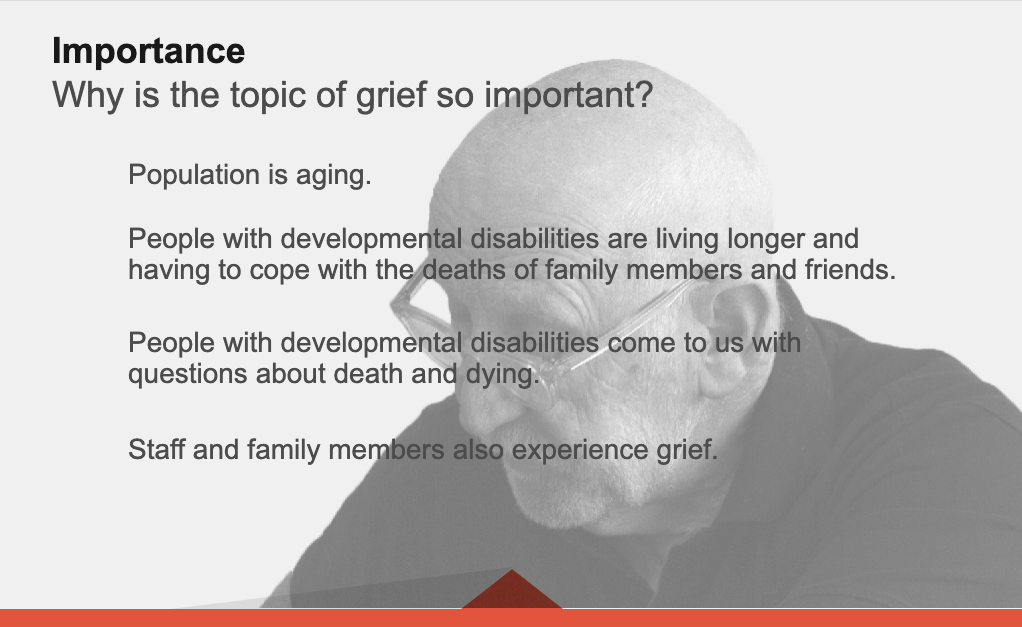
Death is something that we all have to face at some point in our lives. Knowing more about the feelings and thoughts that come after the death of someone close to us can help us and the people we support. This presentation will focus on the grief that comes after someone dies.
This presentation is for general information only. If you have any concerns regarding yourself or someone you are supporting, please contact a healthcare professional. If you are in crisis please contact your local crisis line or access emergency services. http://ontario.cmha.ca/mental-health/services-and-support/crisis-support/
Children’s Grief and Loss
Feelings of grief may be caused by a traumatic event such as death, illness, or divorce. Experiences of discrimination due to racism, ableism, classism, and other stereotypes or biases can also create grief and loss responses in children. These types of experiences can be direct or indirect. As an adult, it is our role to provide a supportive and empathetic response to help children cope with grief. Read more
Grief and Bereavement Resources
Creating a “Book of Memories”
A book of memories commemorates the death of a loved one and highlights the importance of their relationship to survivors. For people with developmental disabilities, creating a book of memories may be a concrete way to help them remember deceased loved ones. Creating a Book of Memories
Your Feelings on the Anniversary Day (Anniversary Day Plan)
The anniversary of a loved one’s death can be a difficult time as it brings back memories of the death. Having a plan for the day often helps. Your Feelings on the Anniversary Day
Managing Grief Better: People With Intellectual Disabilities
Beyond Words produces books, eBooks and other resources for people who find it easier to understand pictures than words. Here are 4 good resources dealing with death and bereavement:
Down Syndrome Association of Scotland http://www.dsscotland.org.uk publishes a booklet “Let’s Talk About Death” that you can purchase Link
Helping People with Developmental Disabilities Mourn
This book explains the how-tos of creating rituals for people with developmental disabilities, including the use of pictures, memory objects, drawing, music, and writing in ritual as well as storytelling. Author Dr. Marc Markell is a grief counselor and university professor. http://www.centerforloss.com/bookstore/home.php
Bereaved Families of Ontario
Bereaved helping the bereaved learn to live with grief. Provides information about our affiliates, should you need support. https://www.bfotoronto.ca/
Toronto Distress Centres
In addition to operating a crisis support line, they offer support to people who have experienced the death of a loved one due to homicide or suicide. https://torontodistresscentre.com
Death is something that we all have to face at some point in our lives. Knowing more about the feelings and thoughts that come after the death of someone close to us can help us and the people we support. This presentation will focus on the grief that comes after someone dies.
This presentation is for general information only. If you have any concerns regarding yourself or someone you are supporting, please contact a healthcare professional. If you are in crisis please contact your local crisis line or access emergency services. http://ontario.cmha.ca/mental-health/services-and-support/crisis-support/