ConnectABILITY Homepage

Property: Power of Attorney for Property

The Substitute Decisions Act sets out the legislative framework for granting continuing powers of attorney for property and guidelines for the persons acting as attorneys for property.

What is the appropriate thing to do about aging and decisions about property?

An individual may become unable to make decisions about his/her property and finances either through a serious illness or accident. All adults in Ontario are encouraged to make a continuing Power of Attorney for Property, appointing someone who can make certain financial decisions if required. The Power of Attorney provides a safeguard against decisions being made by others who do not know the person well.

How is a Power of Attorney put in place?

There is no single formula for choosing the substitute decision-maker. It must be done with due consideration for the needs of the individual and who can best ensure the individual’s wishes are respected if he/she cannot make decisions about finances and property. There are also some legal requirements that limit who can become a substitute decision-maker.

The process of giving authority to someone else for finance and property decisions is fairly straightforward:

  1. List the person’s assets and where they are located.
  2. Review with the person, what is important to him/her (beliefs, values, preferences and wishes).
  3. Identify the details of what the person wants a substitute decision-maker to do in the event that he/she can no longer make decisions.
  4. Identify the substitute decision-maker(s).
  5. Create the Power of Attorney.

The Continuing Power of Attorney for Property is signed and dated by the person appointing the attorney. Two witnesses must watch the person do this and then must co-sign the document in the presence of that person and in the presence of each other. The resulting legal document is known as a Power of Attorney for Property.

Should a lawyer be used to set up a Power of Attorney?

Since the Power of Attorney is a legal document and the appointment of substitute decision-maker(s) is a very significant event, it is recommended that a lawyer be consulted in all cases. The lawyer can provide help with final wording to ensure it is done correctly and that the person’s wishes are fully protected.

What if the older adult cannot name the substitute decision-maker?

Where the person is not capable of making a POA for property, either the PGT becomes the statutory guardian and is later replaced by a family member or there is a court application to appoint a guardian of property.

What can the substitute decision-maker for property do?

A Continuing Power of Attorney for Property allows the substitute decision-maker(s) to make decisions concerning the person’s assets including banking, signing cheques, buying or selling real estate and buying consumer goods.

The appointed attorney can do almost anything with the person’s property that the person him/herself could do except make a Will and change beneficiary designations on life insurance policies, RRSPs and RRIFs.

The document may define limits on the attorney’s power over certain property and transactions.

Who can be an attorney for property?

An Attorney named for property must be:

  1. At least 18 years of age.
  2. Mentally capable of fulfilling the attorney responsibilities.

When does the Power of Attorney for Property take effect?

The Continuing Power of Attorney for Property comes into effect when the person signs the Power of Attorney document or at such other time as the person indicates on the document.

Can more than one Substitute Decision-Maker be named?

Yes. If the person names more than one Attorney for Personal Care then they must also specify how the parties are to make decisions about personal care. There are three options available when there is more than one attorney.

  1. Joint Decisions: substitute decision makers must make any decisions together or jointly. No one attorney can act alone.
  2. Several Decisions: any one of the substitute decision-makers may make a decision on his/her own.
  3. Joint and Several Decisions: substitute decision-makers can act alone or together depending on circumstances such as who is most readily available.

Where can I find more information on Power of Attorney for Property?

Sourced from GUIDE TO PERSONAL CARE AND PROPERTY For Older Adults with a Developmental Disability, The Ontario Partnership on Aging and Developmental Disabilities, 2008 http://www.opadd.on.ca

Stories About Personal Care Issues

Joan Plans for Her Future Health Care Needs

Joan is in her late fifties. During the past year she has been diagnosed with a debilitating condition that will affect her independence. She has become aware that the nature of her condition will require making decisions about treatments. Joan is finding that it is sometimes difficult to understand the information about her condition and to make decisions about required treatments. Joan has talked about this with the family, friends and paid caregivers in her support circle. She has decided to ask for help with making health care decisions by appointing one of her family members as her substitute decision-maker for health care decisions. This substitute decision-maker will be given authority by Joan and will be able to make decision on Joan’s behalf only when Joan is no longer able to do so for herself. The mechanism Joan will use is called the Power of Attorney for Personal Care.

Joan had initially thought she would like to appoint one of her favourite paid support workers to the role of substitute decision-maker for personal care. However when the support circle looked into it they discovered that the person could not be someone who is paid to provide the individual with health care, residential, social, training or support services unless the person is a spouse, partner or relative. Joan’s younger nephew was also ineligible to become a substitute decision-maker for personal care since he was younger than sixteen years of age.

Joan and her support circle gathered some information on the process of establishing a Power of Attorney. They learned that it was best to lay the groundwork for decision-making prior to identifying the substitute decision-maker. In this way Joan would be in a better position to know what she wanted the person to do and who would be best suited to the role.

The support circle scheduled a series of meetings to help Joan. At the first meeting they explored how Joan made her health care decisions. The group met a second time and asked Joan to talk about her beliefs, values and wishes so these could be known when a decision might be made on her behalf. A third meeting focused on having Joan identify the details of what she wanted a substitute decision-maker to do in the event that she could no longer make decisions herself. Then the group reviewed the various responsibilities that could be given and helped Joan decide which of these she wished to give to the substitute decision-maker for personal care. After this foundation was laid, Joan decided to appoint her older sister. Joan and her sister then made an appointment with the family lawyer to complete the Power of Attorney forms. While it was not a requirement to use a lawyer, the support circle felt this would be a good course of action since the lawyer, as an independent third party, could ensure the resulting legal document fully represented Joan’s wishes.

Joan’s Power of Attorney for Personal Care allowed the substitute decision-maker to make decisions related to health care, nutrition and safety. The scope of these decisions was fully defined in the Power of Attorney document. Joan could have also granted her older sister decision-making power related to shelter and clothing. However, Joan felt she would prefer to retain this decision-making power for herself. Joan continues to make her own health care decisions but involves her older sister more often in preparation for the day when Joan may be unable to decide for herself.

More information about the Power of Attorney for Personal Care can be found in this Guide: Section III B. – Personal Care: Power of Attorney For Personal Care.


Sarah Plans to Move From Her Group Home to a Long Term Care Home

Sarah lives in a group home with support from staff of the local developmental services provider. Over the years Sarah has faced a number of health issues. The agency has required that Sarah’s support worker provide guidance to her for health care decisions. In addition, the support worker has always attended medical appointments with her. This practice has been in place for more than thirty years.

At the age of 40, Sarah’s health care needs began to change. Her support worker noticed that the emerging health issues required additional support for Sarah. The agency accommodated these changes over the next ten years and then began to find they could no longer do so. After several discussions with Anne’s support circle, Anne decided she would move to a long term care home. The agency contacted the local CCAC for information about a move to a long term care home.

One of the pieces of information the CCAC required was the name of Sarah’s substitute decision-maker for health care decisions. The agency provided the name of Sarah’s principal support worker. The CCAC indicated that the support worker was not legally entitled to hold such a role and that Sarah would require a substitute decision-maker appointed under the Health Care Consent Act. The agency replied that the principal support worker did indeed fulfill such a role in accordance with agency policy and long-standing practice. The CCAC maintained its position and advised the agency that it could not complete the application process without a substitute decision-maker.

The developmental services provider investigated the provisions of the Health Care Consent Act and found that there was a list of possible substitute decision-makers who could be appointed, with the Guardian being at the top of the list. The agency advised the CCAC that it could be named a substitute decision-maker under the Act because the agency fulfilled the guardianship role for Sarah.

The CCAC refused to accept the agency’s interpretation of the Act and sent the agency’s Executive Director a letter outlining the legislative requirements that a substitute decision-maker be appointed under the Health Care Consent Act prior to admission. The CCAC correspondence noted that the Guardian could be a parent or legally appointed guardian but could not be a staff person of the developmental services agency. Finally, the letter advised the developmental services agency that if they were unable to identify a suitable substitute decision maker, the appointment could be handled by the Consent and Capacity Board that is authorised to appoint representatives to make decisions for an incapable person with respect to admission to a care facility.

The Executive Director discussed the matter with Sarah’s principal support worker. They agreed that it would be in keeping with their agency philosophy if Sarah was able to make the appointment rather then submitting the matter to the Consent and Capacity Board. Consequently, the Executive Director asked Sarah’s principal support worker to investigate who, could be appointed by Sarah as a substitute decision-maker. When the principal support worker investigated Sarah’s case file, she discovered that Sarah had no legally appointed guardian and had lost all contact with her parents when she had been placed in the Ontario government facility for people with a developmental disability at the age of five. However, Sarah had a close friend, Joanne, who was a member of Sarah’s support circle. The support worker thought Joanne might be a possible substitute decision-maker.

The support worker reported these findings to the Executive Director. The support worker was directed to investigate with Sarah whether she would accept Joanne as the SDM. If she did, then Sarah would have to establish a Power of Attorney for Personal Care as provided by the Ontario legislation. The person appointed to this role by Sarah could then be identified as the substitute decision-maker for health care as required under the Health Care Consent Act.

Agency staff found these legal requirements complicated and confusing. However, they facilitated the arrangements with Sarah in order to move her long term care home application through the process.

The Executive Director realized that his agency was out of step with the evolving legal requirements around SDM. He discussed the problem with the Program Director. A few weeks later, the Program Director arranged a training session for staff on substitute decision-making. A representative of the Advocacy Resource Centre for the Elderly provided training and distributed an information booklet. Over the next several months the agency began to review the requirements of legislation and regulations governing substitute decision-making. This review lead to an overhaul of agency policy and required additional staff training to help employees understand the resulting changes to their job responsibilities.

More information about appointing a substitute decision-maker under the Health Care Consent Act and the role of the Consent and Capacity Board can be found in this Guide: Section III D. -Consent and Capacity Board and Section III F. – Health Care: Requirements Under the Health Care Consent Act.


Community Living Service Provider Wants to be in the Communication Loop on Louanne’s Hospital Discharge

Louanne became seriously ill and entered hospital for an extended stay. The service provider operating the group home where Louanne lived kept her bed available so she could return homefollowing hospitalization. A couple of years earlier, Louanne had appointed her mother, Belinda, as Power of Attorney for Personal Care. Belinda was approached by the hospital for consent on some of Louanne’s health care decisions when Louanne was unable to provide consent herself. Belinda was suffering with a mental health problem that sometimes hampered her ability to focus on the consent process on behalf of her daughter. Consequently, Louanne’s brother became involved in communications from the hospital and provided help to his mother in exercising Louanne’s Power of Attorney for Personal Care.

The agency operating the group home discovered that Louanne’s discharge plan was proceeding and a discharge date was being considered. However, the agency had not received any communication from the hospital and Louanne’s brother was unaware of the agency’s support role with Louanne. The agency contacted Louanne’s mother but discovered she was unable to communicate clearly about the discharge plan. The agency became concerned that they would be unable to plan ahead for appropriate staffing and other support that Louanne would need when she returned to her home. Subsequently, the agency Program Director arranged a meeting of the hospital discharge staff with Louanne’s mother and brother. The discussion resulted in the discharge plan being shared with the agency and an agreement to include them in the communication loop.

Sourced from GUIDE TO PERSONAL CARE AND PROPERTY For Older Adults with a Developmental Disability , The Ontario Partnership on Aging and Developmental Disabilities, 2008 http://www.opadd.on.ca

Personal Care: Power of Attorney for Personal Care

What is the Power of Attorney for Personal Care?

In a Power of Attorney for Personal Care, an individual appoints another person to make personal care decisions on his/her behalf in the event that the individual becomes unable to do so. The Power of Attorney for Personal Care is a legal document. The Substitute Decisions Act provides legislative authority for individuals to appoint Powers of Attorney for Personal Care. The Act also sets out guidelines for attorneys to follow in making personal care decisions on behalf of an individual.

Why is it important to consider appointing a Substitute Decision-Maker for Personal Care as one gets older?

Getting older may require changes in how a person makes decisions about the care he/she receives. For example, a chronic health condition may interfere with an individual’s ability to understand the choices he/she faces and to make a decision for needed care. An accident could cause a sudden change in an individual’s decision-making capacity.

All adults in Ontario are encouraged to identify an Attorney for Personal Care (substitute decision-maker) who can make certain decisions if required. The Power of Attorney document provides a safeguard against decisions being made by others who do not know the person well.

How is a Power of Attorney put in place?

There is no single formula for choosing the substitute decision-maker. It must be done with due consideration for the needs of the individual and who can best ensure the individual’s wishes are respected if he/she cannot make personal care decisions. There are also some legal requirements that limit who can become a substitute decision-maker.

The process of giving authority to someone else for personal care decisions can include the following steps:

  1. Describe in detail how decisions are made now.
  2. Review with the person, what is important to him/her (beliefs, values, preferences and wishes).
  3. Identify the details of what the person wants a substitute decision-maker to do in the event that he/she can no longer make decisions.
  4. Identify the substitute decision-maker(s).
  5. Create the Power of Attorney.

A document that assigns the Power of Attorney is signed and dated by the person appointing the attorney. Two witnesses must watch the person do this and then must sign the document in the presence of that person and in the presence of each other. The resulting legal document is known as a Power of Attorney for Personal Care. The witnesses must be at least 18 years old and may not be the spouse or child of the person granting the power of attorney, the person appointed as the attorney or his or her spouse.

Why should a lawyer be involved in establishing a Power of Attorney?

Since the Power of Attorney is a legal document and the appointment of substitute decision-maker(s) is a very significant event, it is recommended that a lawyer be consulted in all cases. The lawyer can provide help with final wording to ensure it is done correctly and that the person’s wishes are fully protected.

What if the older adult cannot name the Substitute Decision-Maker?

In the case of some adults with a developmental disability who are unable to identify the decision-maker, it may be necessary for a guardian of the person to be appointed by the Consent and Capacity Board. The Board can appoint for personal care decisions under the Health Care Consent Act and for property decisions under the Substitute Decisions Act. For more information on the Board see Section III D. – Consent and Capacity Board.

What can the Substitute Decision-Maker do?

Power of Attorney for Personal Care allows the substitute decision-maker(s) to make decisions related to personal care, such as health care, shelter, clothing, nutrition and safety. The scope of these decisions is defined in the Power of Attorney document.

A companion document to the Power of Attorney for Personal Care is the Health Care Directive, also known as a “Living Will”. The Health Care Directive is the means by which an individual gives directions about medical treatment to health care providers. A copy of the Directive should be provided to the Attorney for Personal Care so he/she is clear about the individual’s treatment preferences. For more information on Health Care Directives see Section III C. – The Health Care Directive.

Who can be an Attorney for Personal Care?

The person named as attorney for personal care must:

  • Not be someone who is paid to provide the individual with health care, residential, social, training or support services unless the person is a spouse, partner or relative.
  • Be mentally capable.
  • Be at least 16 years of age.

Can more than one person be named as a Substitute Decision-Maker?

If the person names more than one Attorney for Personal Care then they must also specify how the parties are to make decisions about personal care. There are three options available when there is more than one attorney.

  1. Joint Decisions: substitute decision-makers must make any decisions together or jointly. No one attorney can act alone.
  2. Several Decisions: any one of the substitute decision-makers may make a decision on his/her own.
  3. Joint and Several Decisions: substitute decision-makers can act alone or together depending on circumstances such as who is most readily available.

What if an Attorney for Personal Care has not been appointed?

The legislation provides for a hierarchy of individuals who may make certain types of personal and health care decisions for the incapable person. In the event that no one has been appointed by the individual as an Attorney, the courts will determine who may be appointed as guardian.

While the court appointment provides some protection for the individual, it may be less suitable than an appointment made by the person him/herself.

When does the Power of Attorney for Personal Care take effect?

The Power of Attorney for Personal Care can be created at any time. However, the power of the substitute decision-maker does not come into effect until the person becomes mentally incapable of making decisions for his/her own personal care. Prior to that time, the Power of Attorney can be used to allow the Attorney (the person named as substitute decision-maker) to give and receive information about the individual with service providers. This kind of arrangement allows the Attorney to remain in the communication loop about the individual’s care and health status.

Where can I find more information on Power of Attorney for Personal Care?

Sourced from GUIDE TO PERSONAL CARE AND PROPERTY For Older Adults with a Developmental Disability , The Ontario Partnership on Aging and Developmental Disabilities, 2008 http://www.opadd.on.ca

What To Do After a Fall

As mentioned in the previous articles, the observations of family, friends and/or support person are critical in documenting important information that can be relayed to the Doctor. In Ontario, short term support via Community Care Access may be requested to assist during the recovery period.

It is always a good idea to see the doctor after you have had a fall especially if any of the following occur:

  • Loss of consciousness before or after the fall
  • Any injury sustained from the fall
  • A strong or lingering pain or dizziness
  • Nausea
  • Overall weakness
  • Headaches
  • Vision problems

If you fall or are supporting someone who had a fall, take note of your/their condition as symptoms may appear days following a fall.

A fall may be the sign of an illness or caused by medication, so it is always better to mentions falls to the doctor as they will be able to assess the situation and see whether the fall was linked to an illness or by prescribed or over the counter medications.

How to Prevent Future Falls

  • Check the environment for fall hazards
  • Wear suitable footwear
  • Have the doctor make a referral to the local Community Care Access Centre for occupational and physiotherapy assessments as walking aids may be needed
  • Install grab bars, non-slip rugs were needed
  • Make sure that handrails are attached securely to the wall
  • Consider getting an emergency call device or a cordless phone close at hand

Getting back to walking after a Fall

  • Discuss your fear of falling with family members, caregivers and or with health professionals
  • A physiotherapist can help with exercises to strengthen and increase flexibility as becoming inactive can lead to increase risk of falling
  • Knowing what to do when you fall and the potential consequences of falling will give you control over the fear
  • Maintain social interactions and walk with a buddy when in the community as this will help with your wellbeing

https://www.ontario.ca/page/homecare-seniors Community Care Ontario Access website gives information on locations and services

Local Health Integrated Network (LHIN) provides a wide-range of health-care services and resources to support you at home, at school or in the community. http://healthcareathome.ca/central/en

http://www.senioryears.com/seniorcentres-Ont.html A Seniors Social and information website

https://www.ontario.ca/page/information-seniors Information on Senior’s Agencies in Ontario

Sources:

  • Public Health Agency of Canada handout — If you fall or witness a fall, do you know what to do?
  • Active Independent Aging — A community guide for falls prevention and Active living – Facts about risk factors for falls

How to Prevent Falls in the Community

Many Seniors Agencies provide a variety of support services to assist in community access and in-home assistance. A person with a developmental disability may require additional supports. Often funding assistance for these additional supports is available through a government program. In Ontario, individuals who live at home with family may make application for supports to assist in community access through the Special Services at Home Program through the local Ministry of Children, Community and Social Services office. Refer to the links at the end of the document.

  • Ensure walkways, paths and outdoor steps are in good repair.
  • Install good outside lighting on steps and pathways.
  • Remove snow, ice and debris such as branches, stones off pathways and stairs.
  • Use sand or salt in winter months.
  • Avoid sidewalks that are in disrepair and ask for assistance if needed from a passerby.
  • Use ice pick prongs on a cane in winter months.
  • Check the weather before leaving and dress appropriately.
  • Wear proper walking shoes and/or boots with non-slip soles and heels of reasonable height.
  • Make sure to carry identification that is up to date including emergency contacts, medications, Dr.’s name and number.
  • Program under the name “ICE” in case of emergency contact number on your cell phone. Police and paramedics will look for this.
  • Avoid going out in days of high heat, humidity or with high smog levels.
  • Take water to remain hydrated.
  • Consider the best time of day to be out in the community.
  • On bright days, sunglasses may be recommended by your Doctor to assist in reducing glare and improving vision.
  • Go with a friend or companion whenever possible.
  • Be observant to the surroundings and alert to traffic at all times. “Stop, Look and Listen.”

http://www.mcss.gov.on.ca/index.aspx Ontario’s Ministry of Children, Community and Social Services website. Information on Programs and services such as Special Services at Home.

http://www.senioryears.com/seniorcentres-Ont.html A Seniors Social and information website

https://www.ontario.ca/page/information-seniors Information on Senior’s Agencies in Ontario

https://www.medicalert.ca/Products/All Information on ordering Medical alert bracelets, Necklaces etc.

How to Prevent Falls at Home

A person with a developmental disability under the age of 65 years, may be eligible for assistance through government programs to help cover the cost of specialized footwear, walking aids and other safety devices. For example, in Ontario apply for funding via Ontario Disability Support Program (ODSP). ODSP will coordinate with the Adapted Devices Program (ADP) through the Ministry of Health to provide funding. Once over the age of 65 years, applications go to the ADP program directly. Assistance is provided by the therapist/supplier or alternatively a Physiotherapist or Occupational Therapist from a local hospital or clinic. In Ontario a Doctor’s referral to the local Community Care Access Center would connect you with the local community supports.

Here are some helpful tips that could help prevent falls in the home:

  • Install proper lighting throughout the home. Pay close attention to stairs and bathrooms. Use night lights in the hallways, particularly between bedroom and the bathroom.
  • Keep floors and stairs free of clutter.
  • Wear proper foot wear. Shoes, boots and slippers should provide good support and have good soles. Avoid loose slippers or stocking feet.
  • Use walking aids and other safety devices for extra safety. If using a cane or walker, make sure that it is the right height and that the rubber tips are not worn.
  • Have at least one handrail on all stairways and steps in the house. Ensure that the handrails are securely attached and in good repair.

How to Prevent Falls on the stairs

A person with a developmental disability may have additional perceptual issues that can increase the likelihood of falls. A clear diagnosis with specific guidelines and recommendations will ensure the proper adaptations unique to the particular individual. Support and supervision may be required to ensure safety.

  • Make sure there is proper lighting (there should be a light switch at the top and bottom of the stairs.
  • Ensure that you are not wearing your reading glasses. If using bifocals, adjust them so that you can see the stairs clearly,
  • Wear proper foot wear. Avoid using loose slippers or stocking feet.
  • Check that the steps are in good repair and are slip-resistant. Fix promptly if there are broken or uneven stairs.
  • Paint or use a contrasting coloured tape on the edge of stairs to enhance the visibility of each step.
  • Ensure that handrails are securely attached and in good repair.
  • Remove any loose stair or floor coverings. If you must have a rug make sure it has a non-slip/rubber backing.
  • Remove any clutter from the stairs or landing. Avoid storing items temporarily on the stairs.
  • If carrying something, make sure it’s not too large to hide the view of the stairs and that one hand is free to use the handrail.
  • Take the stairs slowly one step at a time. Do not rush; it is one of the major causes of falls.

www.phac-aspc.gc.ca/seniors-aines— 12 steps to stair safety at home

How to Prevent Falls in the Shower or Bathtub

There is often funding available for assistive devices, home modifications/renovations and vehicle modifications if the eligibility criteria is reached. In Ontario, the local Community Care Access Center can provide assistance in assessing and recommending the appropriate aids and renovations and in funding applications. Please refer to the links section of the document for further information.

  • Install safety devices
    1. grab bars (in shower/ bath tub and toilet area)
    2. shower chairs
    3. hand held shower head
    4. raised toilet seat
    5. toilet seat rail
  • Ensure that the bathtub plug is easy to reach and to use.
  • Use a full-length rubber bathtub mat for every bath or shower.
  • Ensure the rug outside of the tub or shower has a rubber backing.
  • Use portable grab bars or install wall mount grab bars to help with getting in and out of the tub/shower.
  • Use a bath seat with rubber tips on the legs.
  • Use a hand held shower head and a long hand brush.
  • Ask for help if you have difficulty getting into and out of the bathtub or shower.
  • Use a raised toilet seat with hand rails if you have problems sitting or getting up from the toilet.

*Some aids or devices are designed specifically for an individual and should be recommended by the consulting specialist.

http://www.marchofdimes.ca/dimes/people_with_disabilities_caregivers/programs_and_services/hvmp/The+Home+and+Vehicle+Modification+Program.htm March of Dimes Home and Vehicle modification Programme and funding

Local Health Integrated Network (LHIN) provides a wide-range of health-care services and resources to support you at home, at school or in the community. http://healthcareathome.ca/central/en

http://www.cmhc-schl.gc.ca/en/co/prfinas/index.cfm Canadian Mortgage and Housing Programme Home Renovation funding for Seniors and People with Disabilities.

Sources:

  • Active Independent Aging – A community guide for falls prevention and Active living –
    Activity tool 1. Use your sea legs in the bathroom!
  • Public Health Agency of Canada handout – If you fall or witness a fall, do you know what to do?
  • Active Independent Aging – A community guide for falls prevention and Active living – Handout 1. A guide to preventing Falls

Falling is a very serious health problem for seniors

Facts

  • One third of seniors over the age of 65 have a fall every year and half of them have more than one fall.
  • Falls are the most common cause of injury.
  • Seniors are nine times more likely to have an injury than someone under 65.
  • Approximately one third of injury related hospitalizations for seniors are the result of falls.
  • Half of all falls happen at home.

Precautions to Take to Reduce the Risk of Falling

A person with a developmental disability may require the support of a family member, friend and/or a staff person to assist in communicating with and coordinating supports with their Doctor and other specialists. It is helpful to keep a daily or weekly log of observations of any health issues to review with your Doctor, other supports and specialists. This will be most beneficial when an individual can not express themselves without support. In your log, write down any questions you may have as they come up. Take this with you to all appointments or consultations. This will ensure that all concerns have been addressed and lead to an accurate assessment.

  • Speak to your doctor about fall prevention.
  • Have regular vision and hearing tests.
  • Take prescription and over the counter medications correctly.
  • Keep a medication record and review it regularly with the doctor and pharmacy.
  • Tell your doctor if your medication makes you dizzy or lightheaded.
  • Get help and advice from a qualified Occupational and Physical Therapist.
  • Eat a healthy diet.
  • Develop a good and safe program for staying active.

Sources:

  • Active Living Coalition for Older Adults (ALCOA) issue number 3, November 2002—Preventing Falls in Older Adults by MARK Speechley, PhD, University of Western Ontario
  • Active Independent Aging — A community guide for falls prevention and Active living – Handout 1. A guide to preventing Falls
  • Public Health Agency of Canada handout — If you fall or witness a fall, do you know what to do?

Aging Issues

Getting older is part of life and not well understood by those not yet in the midst of it. Gerontologists, retirement planners and healthcare professionals tell us that it is important to plan ahead to age well. One step in the right direction is to understand more about the aging process and its possible impacts on us.

The current generation of older adults with a developmental disability is the first to look forward to living into old age. This has important learning implications for caregivers and for people with a developmental disability. Some aspects of aging and developmental disabilities are summarized below.

Longer Life Expectancy

In the past, the life expectancy of people with a developmental disability was shorter than the general population. Today, with improvements in quality of life, more community resources and advances in medical knowledge, people with a developmental disability can also look forward to older adulthood.

The Aging Boom

Longer life expectancy for people with developmental disabilities comes at a time when the Baby Boom Generation is entering the senior years. The earliest baby boomers, born in 1945 following WW II, are now in their 60’s. There will be increasing pressure on our social and health programs to adjust to the phenomenon of the Aging Boom.

Services for People with a Developmental Disability

Developmental service providers are witnessing the effects of aging on many of the people they serve and on aging family caregivers. Developmental service workers have not traditionally been trained in the aging process and do not have a lot of experience supporting older adults with a developmental disability. The system of services for people with a developmental disability faces significant new pressure as a result of the longer life expectancy of people being supported, the aging of family caregivers and the Aging Boom.

The Long Term Care System – Services for Older Adults

The system of services for older adults includes a range of health, social, recreation, home support and residential services. The people working in this system are educated in their respective disciplines and are generally knowledgeable about aging. However, they do not usually have any training in developmental disabilities. As older adults with developmental disabilities access these services, providers are being pressed to become knowledgeable about their needs.

Legislation and Regulation

Long term care and developmental service providers in some jurisdictions are sharing their respective knowledge and collaborating on innovative projects to support older adults with developmental disabilities. They are however, often constrained in their innovation due to the legislative and regulatory frameworks under which they must operate. Government ministries are beginning to examine existing regulations and develop protocols to enable greater flexibility so the two sectors can respond with efficient and effective strategies and programs.

Learning How to Age Well

Aging is a normal part of the life process but it does not happen automatically. It requires knowledge about the aging process and commitment to maintaining one’s quality of life. People with developmental disabilities will need guidance to acquire the knowledge and skills they need to age well. Caregivers need to learn about aging so they are able to provide informed support. Aging brings changes in the body, social roles, income, emotions and interests. These changes require that each person make adjustments to maintain the quality of his life as he grows older. There are four very important things to keep in mind as one ages.

  1. As We Grow Older We Become More Uniquely Ourselves
    Aging does not change who we are. If we are physically active when we are young we will be physically active when we are old. If we enjoy making friends now we will still enjoy making friends as an older adult. Aging ripens who we are.
  2. Use It or Lose It
    If we stop lifting weights we will experience a loss of muscle tone and strength, regardless of age. If we stop exercising our minds we will lose some of our capacity to remember and to learn, regardless of how old we are. If we continue to use and develop our mental and physical abilities as we age we will remain mentally agile and physically fit.
  3. Plan for the Transition
    We hope we will get older. It will bring change beyond our control and offer opportunity to make changes within our control. If we learn about the aging process and plan ahead for how we will enjoy getting older, we can make the transition with much more ease. If we are involved in supporting a person with a developmental disability who is approaching older adulthood, then we owe it to him/her and to the support circle to learn about aging.
  4. Maintain Social Relationships
    The most common factor that leads to a person requiring placement in a long term care home is a lack of social relationships and the isolation that comes with it. People who remain involved with other people maintain their independence in older adulthood.

Ageism

We learn early in life to make distinctions based on age. Age is a useful variable. It provides us with a tool to organize society and to govern access to certain privileges. Age defines when we may drive a car, vote and attend movies on our own. Age is used to group young people into categories to ensure fairness of competition in baseball, soccer and hockey. Civil society uses age as a means to structure rites of passage such as beginning school, retiring from employment and joining seniors’ organizations. Birthdays are a means to celebrate another year in a person’s life. Age is used to group people into generations with certain common characteristics such as the depression generation (those who were children during the Great Depression of the 1930’s) and the baby boomers (those born between the end of WW II and 1965).

Age can also be misunderstood and misused. Sometimes these misunderstandings are funny, such as when a 5 year old calls his 29 year old father an old man. There are other misunderstandings of aging that can be damaging to individual older adults and to society generally. When age is used to limit rights, to insult or to group people based on myths rather than reality, ageism is at work.

Examples of ageism based on myth are illustrated in these statements: “You can’t teach an old dog new tricks.” “Older workers are slow and less productive.” “Old people are a drain in society.” The truth is different than these commonly used statements lead us to believe.

Older Adults and Learning

The fact is that older adults are pursuing education in growing numbers. Many colleges, universities and elderly person’s centres have educational programs geared to the learning needs of older adults. Online educational opportunities for seniors are also becoming more popular. Older adults can learn and want to learn.

Older Workers and Productivity

The age of an employee has no effect on the person’s performance. Studies conducted to assess the performance of older workers found that older employees demonstrate acceptable productivity and have attendance records equal to or better than other age groups. Employers themselves, also report that older workers are dependable and meet productivity requirements. Generally, older employees perform as well as or better than younger employees. Qualifications, experience, work attitudes and interests are more useful criteria in hiring decisions than age.

Old People are a Drain on Society

The facts show that:

  • 69% of seniors provide some form of help to the people in their lives—their spouse, children, grandchildren, friends and/or neighbours.
  • 19% of seniors participate in formal volunteer work. Informally, about the same number also look after children at least once a week.
  • 23% of seniors provide unpaid care to other seniors, thereby helping to reduce our health care costs.
  • The economic value of seniors’ volunteer services is estimated at between $764 million and $2.3 billion annually.
  • Seniors are the largest per capita donors to charity in the Canadian population.
  • Collectively, seniors are a powerful consumer force. Their participation in the marketplace helps contribute to the stability of many Canadian businesses, especially in the service sector.
  • Seniors make major contributions to our economy through the income, property and sales taxes they pay.

For more information on ageism:

Bath/Shower Sequence

Good personal hygiene is a necessary life skill that can help one have positive self-esteem, and provide more opportunities in adulthood to get and maintain a job, and to lead a healthy life style. As children get older, and reach puberty, it is a good time to teach how to bathe/shower independently, with minimal prompting while keeping privacy and personal space in mind.

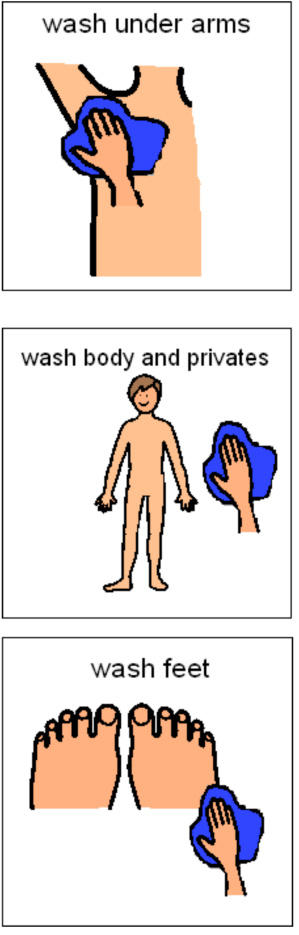
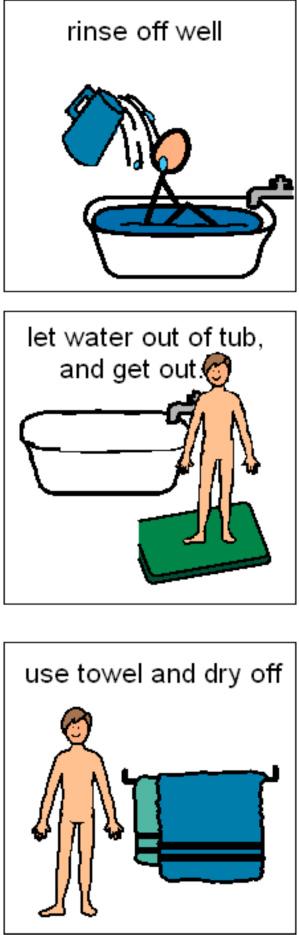
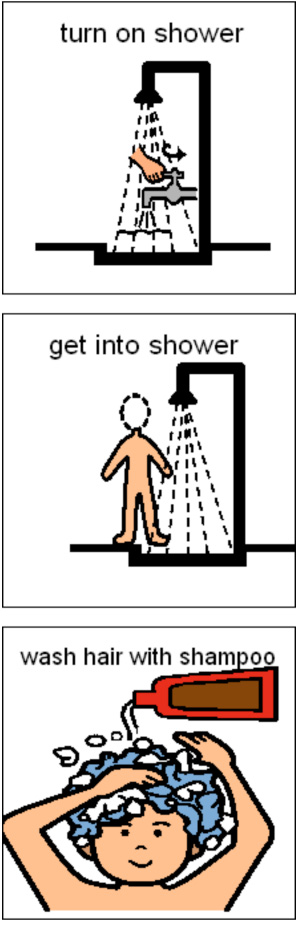
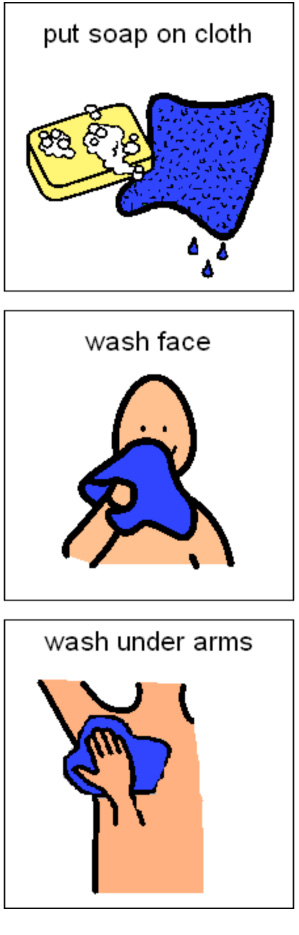
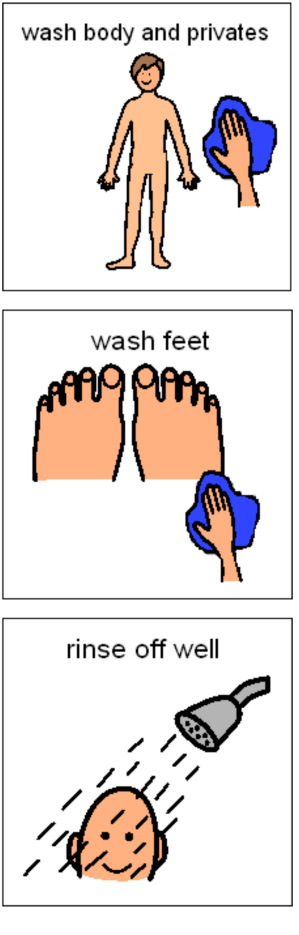
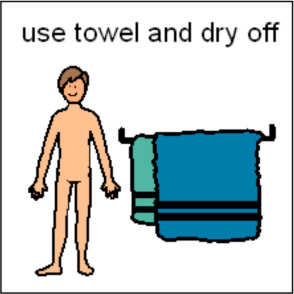
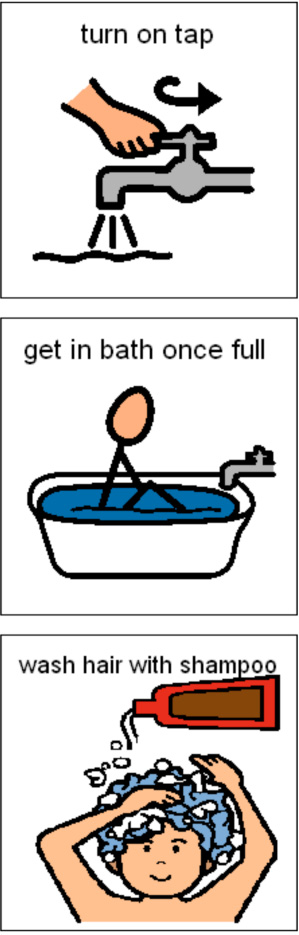
When teaching a new skill to increase independence, you may want to use a visual sequence. A visual sequence uses pictures (real photos, picture symbols, line drawings) to break down a task into smaller steps. By breaking down a skill into smaller steps, it can help teach the skill one step at a time.

Before making a visual sequence for bathing/showering, you would want to discuss the importance of having good hygiene, when to shower or bathe, and what areas are most important to clean (hair, under arms, private areas)

When making a visual sequence of an area where it will get wet, it is a good idea to have it laminated, and put in the shower stall/bath tub at eye level for the individual to follow. You may also want to make a copy of the visual sequence to review before having a bath/shower. An idea would be to create a book about bathing/showering with the same visuals used in the sequence.

Here is an example of a showering and bathing visual sequence.

Bathing/Showering Sequence


Showering Sequence


Social Skills Program

teacher playing with children

About the Program:

This kit is designed to provide classroom teachers with all the activities and material ideas required to implement the sessions in the classroom.

There are six sessions, usually implemented on a weekly basis with the entire group of children. The sessions are structured so that they provide information on a specific topic through a variety of methods.

Each session begins with an icebreaker to get children warmed up. This is followed by a visual schedule of the activities that will occur and a set of rules.

Puppet scenarios are carried out demonstrating the concept or skill that is being discussed for that week. The scenarios promote discussion regarding the topic and there are visuals to support each main point.

A story describing the topic and desired responses is included. This is followed by a few cooperative games each week. The circle closes with an art activity that can be carried out immediately or left with the group to be carried out during the week.

Informing Parents

As a school-age teacher, you may wish to share with the parents the fact that you are implementing a social skills program in your classroom.

As a program consultant implementing this program in partnership with a classroom teacher, you will require parental consent.